Production AI agents access sensitive data, execute critical business logic, and make autonomous decisions that impact enterprise operations. This power creates security challenges fundamentally different from traditional applications. Agents process natural language inputs that attackers manipulate through prompt injection, they retrieve and synthesize data from untrusted sources, they execute actions across system boundaries without human oversight, and their probabilistic behavior makes deterministic security guarantees impossible. OpenAI acknowledged in December 2025 that prompt injection “much like scams and social engineering on the web, is unlikely to ever be fully solved.” Organizations deploying agents must accept this reality and implement defense-in-depth strategies that reduce risk to acceptable levels rather than seeking perfect protection.
This article examines security threats specific to agentic AI and practical defenses that reduce attack surface. We explore prompt injection attacks and mitigation strategies, data exfiltration prevention, secure tool call validation, zero-trust architecture for agents, and incident response for AI security events. The implementations provide patterns that organizations use to deploy agents with appropriate security controls.
Prompt Injection: The Primary Threat Vector
Prompt injection ranks as the number one vulnerability in OWASP’s 2025 Top 10 for LLMs, appearing in 73% of production AI deployments during security audits. The attack manipulates agent behavior by embedding malicious instructions in inputs the model processes. Direct prompt injection occurs when attackers craft inputs that override system instructions. Indirect prompt injection embeds attacks in external content like web pages, emails, or documents that agents retrieve. Research shows indirect attacks succeed with fewer attempts and broader impact than direct injections because agents trust retrieved content implicitly.
A January 2025 attack against an enterprise RAG system demonstrated the severity. Attackers embedded malicious instructions in a publicly accessible document. When the agent retrieved this document, it leaked proprietary business intelligence to external endpoints, modified its own system prompts to disable safety filters, and executed API calls with elevated privileges beyond user authorization scope. The attack succeeded because the system treated all retrieved content equally without trust boundaries between external data and system instructions.
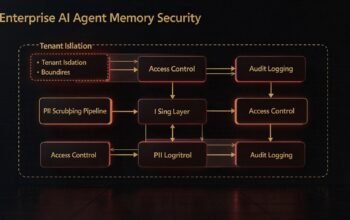
Mitigation requires layered defenses because no single technique provides complete protection. Input validation scans all untrusted content with classifiers detecting adversarial commands in text, images, and UI elements. Context isolation separates trusted system instructions from untrusted external data using different tokens or namespaces. Output verification validates agent responses before execution, checking for unexpected tool calls or data access patterns. Sandboxing restricts agent capabilities so successful injections cause limited damage. User confirmation gates require human approval for sensitive actions like sending emails or making payments.
Preventing Data Exfiltration
Agents accessing enterprise data create exfiltration risks where attackers extract sensitive information through manipulated outputs. Successful attacks embed instructions that cause agents to include confidential data in responses, send data to external endpoints through API calls, store sensitive information in agent memory systems, or encode data in timing patterns detectable to attackers. Organizations implement Data Loss Prevention controls preventing agents from outputting credit card numbers, social security numbers, and other regulated data, monitoring outbound network connections from agent infrastructure, sanitizing agent responses before delivery to users, and implementing least privilege access limiting agent data access to operational requirements.
Secure Tool Call Validation
Agentic systems become dangerous when models can act through tool calls. An agent that only answers questions poses limited risk. An agent that can execute code, send emails, or modify databases becomes an attack vector if compromised. Every tool call must be validated before execution. Authorization checks verify the user has permission for the requested action. Input validation ensures parameters meet expected formats and constraints. Rate limiting prevents abuse through excessive tool invocations. Audit logging records all tool calls for forensic analysis.
Zero-Trust Architecture for Agents
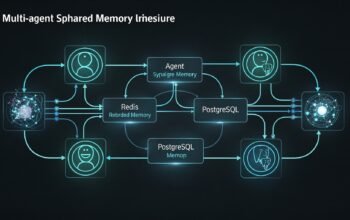
Traditional security models trust internal traffic while scrutinizing external access. Agents blur these boundaries by retrieving external content and executing operations across system boundaries. Zero-trust principles treat every interaction as potentially hostile regardless of source. Workload identity assigns unique identities to each agent enabling fine-grained access control. Mutual TLS authenticates both client and server in every connection. Policy-based controls enforce authorization at the transaction level rather than the session level. Continuous verification monitors agent behavior detecting anomalies that indicate compromise.
Conclusion
Securing agentic AI requires accepting that perfect defense remains impossible and implementing pragmatic controls that reduce risk to acceptable levels. The patterns examined provide tested approaches for mitigating prompt injection, preventing data exfiltration, validating tool calls, and applying zero-trust principles to agent deployments. Organizations that master these security practices deploy agents with confidence while maintaining appropriate caution about the limitations of current defenses. The final article examines real-world case studies demonstrating successful agent deployments across industries.
References
- Prompt Injection Attacks: The Most Common AI Exploit in 2025 – Obsidian Security
- LLM01:2025 Prompt Injection – OWASP
- Understanding Prompt Injections – OpenAI
- Mitigating Prompt Injections in Browser Use – Anthropic
- Indirect Prompt Injection: The Hidden Threat – Lakera
- AI Agent Attacks in Q4 2025 Signal New Risks – eSecurity Planet
- OpenAI Admits Prompt Injection is Here to Stay – VentureBeat