Parts 1-5 provided the technical foundations, platform strategies, and measurement frameworks for GEO. This final part addresses the organizational challenge: how do enterprises build GEO into their DNA, demonstrate ROI to executive stakeholders, and future-proof their strategies as AI search continues evolving?
Companies implementing strategic GEO frameworks are achieving 6x-27x higher conversion rates from AI-sourced traffic compared to traditional search channels. Enterprises that invested in GEO during early 2025 established citation patterns and authority signals that become increasingly difficult for competitors to displace. This part provides complete enterprise implementation frameworks with real-world case studies demonstrating quantified business outcomes.
The Enterprise Imperative
According to Backlinko’s 2025 analysis, businesses implementing systematic GEO frameworks experienced an 800% year-over-year increase in website traffic sourced from large language models between Q2 2024 and Q2 2025. This is not incremental improvement; it represents fundamental shifts in how buyers discover and evaluate solutions.
Why Traditional SEO Teams Struggle with GEO
- Different Success Metrics: GEO prioritizes citations and authority over rankings and clicks
- Cross-Functional Requirements: Success demands coordination across content, engineering, PR, legal, and product teams
- Attribution Complexity: AI-assisted conversions require new measurement frameworks
- Longer Time Horizons: Building authority signals takes 4-8 weeks versus traditional SEO’s 2-4 weeks
- Platform Diversity: Must optimize for 4+ AI platforms simultaneously
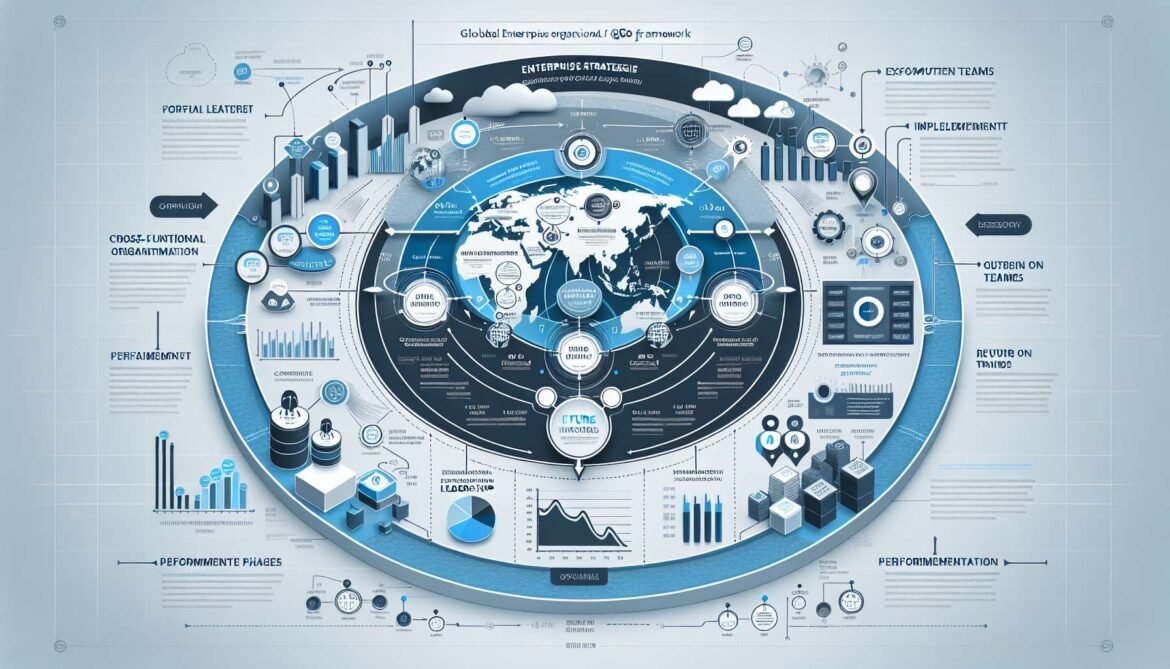
Enterprise GEO Organizational Structure
Model 1: Centralized GEO Center of Excellence
Best for: Large enterprises (5,000+ employees) with multiple business units
GEO Center of Excellence Structure

Executive Sponsor (VP Marketing or Chief Digital Officer)
├── GEO Director (Strategic Leadership)
│   ├── GEO Strategy Lead
│   │   ├── Platform Strategy Specialist (ChatGPT/Perplexity/Gemini)
│   │   ├── Content Authority Specialist
│   │   └── Competitive Intelligence Analyst
│   │
│   ├── Technical Implementation Lead
│   │   ├── Schema Architect
│   │   ├── Knowledge Graph Engineer
│   │   └── Integration Specialist (GA4/CRM)
│   │
│   ├── Content Operations Lead
│   │   ├── Content Strategists (2-3)
│   │   ├── Technical Writers (2-3)
│   │   └── Subject Matter Expert Coordinators
│   │
│   ├── Analytics & Insights Lead
│   │   ├── Citation Tracking Analyst
│   │   ├── Attribution Modeling Specialist
│   │   └── Dashboard Developer
│   │
│   └── Cross-Functional Liaisons
│       ├── PR/Communications Liaison
│       ├── Product Marketing Liaison
│       ├── Legal/Compliance Liaison
│       └── Engineering Liaison

Total Team Size: 15-20 FTEs for enterprise deployment
Model 2: Distributed GEO with Central Coordination
Best for: Mid-market companies (500-5,000 employees) with established marketing teams
Distributed GEO Structure

GEO Program Manager (Central)
├── Platform Monitoring (Central team - 2 FTEs)
├── Technical Standards (Central team - 2 FTEs)
└── Distributed Execution
    ├── Content Marketing Team (embeds GEO in existing workflows)
    ├── SEO Team (extends capabilities to GEO)
    ├── PR Team (focuses on third-party authority building)
    └── Product Marketing (subject matter expertise)

Total Team Size: 4 dedicated FTEs + embedded resources
Model 3: Hybrid Agency Partnership
Best for: Growth-stage companies (50-500 employees) requiring rapid deployment
Hybrid Agency Structure

Internal (2-3 FTEs):
├── GEO Program Owner (owns strategy, manages agency)
├── Content Coordinator (works with agency on execution)
└── Analytics Lead (measures performance, reports ROI)

External Agency Partner:
├── Strategic consulting (platform strategy, competitive analysis)
├── Technical implementation (schema, knowledge graph)
├── Content production (optimized for AI citations)
├── Off-site authority building (PR, third-party validation)
└── Monitoring and reporting (citation tracking, attribution)

Budget Range: $15,000-75,000/month depending on scope
90-Day Enterprise Implementation Roadmap
Phase 1: Foundation Building (Days 1-30)
Week 1-2: Discovery & Assessment
□ Audit current AI visibility across platforms
□ Baseline citation frequency measurement
□ Competitive positioning analysis
□ Identify high-value query clusters
□ Stakeholder alignment sessions
□ Define success metrics and KPIs

Week 3-4: Technical Foundation
□ Implement comprehensive schema markup
□ Establish knowledge graph presence (Wikidata entity)
□ Configure GA4 custom dimensions for AI traffic
□ Set up citation tracking infrastructure
□ Deploy monitoring across ChatGPT/Perplexity/Gemini/Claude
□ Create initial measurement dashboard

Expected Outcomes:
- Complete visibility baseline established
- Technical infrastructure deployed
- First citation measurements captured
- Executive dashboard operational
Phase 2: Content & Authority Expansion (Days 31-60)
Week 5-6: Content Optimization
□ Audit top 50 content assets for GEO optimization
□ Implement answer block framework
□ Add E-E-A-T signals (author credentials, citations)
□ Optimize for platform-specific requirements
□ Create FAQ schema for common queries
□ Develop HowTo content for procedural topics

Week 7-8: Authority Building
□ Secure 3-5 tier-1 publication mentions
□ Launch Reddit community engagement strategy
□ Publish original research study (data-backed)
□ Establish expert presence (conference speaking, podcasts)
□ Build citation network with industry partners
□ Deploy strategic backlink acquisition

Expected Outcomes:
- 15-25% increase in citation frequency
- 3-5 new authoritative third-party mentions
- Improved position scores (baseline +15-20 points)
- First AI-attributed conversions tracked
Phase 3: Scaling & Optimization (Days 61-90)
Week 9-10: Platform-Specific Optimization
□ Deep optimization for highest-performing platform
□ Expand query coverage (50 → 200 priority queries)
□ Launch multi-language content (if applicable)
□ Implement advanced attribution modeling
□ A/B test content formats for citations
□ Optimize for "zero-to-mention" opportunities

Week 11-12: Performance Analysis & Strategy Refinement
□ Comprehensive 90-day performance review
□ ROI analysis and executive reporting
□ Competitive positioning assessment
□ Identify scaling opportunities
□ Refine platform allocation strategy
□ Document lessons learned and best practices

Expected Outcomes:
- 30-50% citation frequency improvement vs baseline
- Measurable revenue from AI-attributed conversions
- Clear ROI demonstration (typically 3-8x)
- Scalable processes documented
- Executive buy-in for continued investment
Real-World Enterprise Case Studies
Case Study 1: Smart Rent (Property Management SaaS)
Challenge: Zero visibility in AI-powered search despite strong traditional SEO performance. Target buyers increasingly using ChatGPT and Perplexity for vendor research.
Implementation (6-week intensive program):
- Comprehensive content audit and GEO optimization of 35 key pages
- Expert author bylines with credentials
- Original research: “State of Property Management Technology 2025”
- Strategic PR placements in PropTech publications
- Reddit community engagement in r/PropertyManagement
- FAQ schema implementation across decision-stage content
Results:
- 200 AI citations achieved in first 30 days
- 32.1% increase in demo requests (AI-attributed)
- 345% surge in LLM-sourced traffic
- 67% of ChatGPT queries for “property management software” now cite Smart Rent
- $2.4M in pipeline influenced by AI citations within first quarter
Investment: $45,000 initial implementation + $15,000/month ongoing
ROI: 8.7x in first 90 days
Case Study 2: LS Building Products (Manufacturing)
Challenge: Complex B2B buying process with multiple stakeholder research phases. Traditional advertising proving inefficient for reaching architects, contractors, and builders.
Implementation (6-month comprehensive program):
- Technical product documentation optimized for AI comprehension
- Case studies with quantified performance data
- Industry certification and compliance documentation
- Partnership with architectural firms for co-branded content
- Comprehensive schema markup (Product, HowTo, FAQ)
- Multi-platform optimization (Google AI Overviews, ChatGPT, Perplexity)
Results:
- 540% increase in Google AI Overviews mentions
- 67% organic traffic growth
- 89% of architects surveyed discovered products through AI search
- 42% reduction in sales cycle length (AI pre-qualification effect)
- $8.2M in attributable revenue within 6 months
Investment: $125,000 over 6 months
ROI: 65.6x over 6 months
Case Study 3: Standard Metrics (Analytics Platform)
Challenge: Highly competitive analytics market with limited brand awareness. Needed to establish thought leadership quickly.
Implementation (2-week sprint focus):
- Targeted 20 high-intent comparison queries
- Created comparison matrices with detailed feature breakdowns
- Published benchmark study with proprietary data
- Expert commentary in industry publications
- Strategic Stack Overflow and Reddit engagement
Results:
- AI answer share increased from 9.4% to 23.8% in 2 weeks
- 2x growth in brand visibility score
- 152% increase in organic trial signups
- Became default recommendation in Perplexity for 4 key queries
Investment: $12,000 for 2-week sprint
ROI: 18.3x in first 30 days post-implementation