Most agent tutorials end at the session boundary. The agent helps a user, the conversation closes, and the next time that user returns, the agent starts from zero. It asks for context it already gathered. It makes suggestions it already made. It repeats questions the user already answered. In a demo, this is invisible. In production, it is a fundamental failure that erodes user trust and limits what agents can actually accomplish.
Enterprise AI agents face a different class of requirements than demo agents. They operate across days, weeks, and months. They work with users who have ongoing projects, evolving preferences, and institutional knowledge that took years to build. They need to remember what they did, what they learned, and how they solved problems, not just within a single session but across every session they have ever run.
This series builds a complete long-term memory architecture for production AI agents from the ground up. This first part establishes why single-session agents break, introduces the three memory types that enterprise agents need, and maps out the full architecture this series will implement across Parts 2 through 8.
How Single-Session Agents Fail in Practice
The failure modes of stateless agents are predictable and compound over time. Understanding them precisely is the first step toward building the right solution.
Context Amnesia
Every session starts with a blank context window. The agent has no memory of prior interactions, so it cannot build on previous work. A user who spent three sessions refining a data model with an agent must re-explain the model from scratch in session four. This is not just annoying. It means the agent can never accumulate understanding about a user’s domain, preferences, or constraints. It is permanently limited to whatever the user remembers to re-explain each time.
Repeated Discovery
Agents performing research, analysis, or exploration repeat work they have already done because they cannot recall having done it. A code review agent re-analyses patterns it already identified. A research agent re-fetches documents it already retrieved and summarised. Each redundant operation costs tokens, time, and money. At enterprise scale with dozens of concurrent agent sessions, this waste compounds significantly.
Inability to Learn
Single-session agents cannot improve from experience. An agent that made a poor tool selection, took an inefficient path, or misunderstood a user’s intent has no mechanism to record that failure and avoid repeating it. Every session is the first session. An agent with persistent memory can store what worked and what did not, build up successful patterns, and get genuinely better at its job over time.
Loss of Relational Context
Enterprise work is relational. Projects have history. Users have colleagues, dependencies, and ongoing commitments. An agent that does not remember these relationships cannot reason about them. It cannot connect a new request to a related decision made two weeks ago, or notice that a proposed approach conflicts with a constraint the user mentioned in a previous session.
flowchart TD
    subgraph Stateless["Stateless Agent - Session Boundary Resets Everything"]
        S1["Session 1\nUser explains project context\nAgent helps with task A"]
        S2["Session 2\nUser re-explains context\nAgent helps with task B"]
        S3["Session 3\nUser re-explains context\nAgent helps with task C"]
        S1 -.->|"Memory lost"| S2
        S2 -.->|"Memory lost"| S3
    end

    subgraph Stateful["Stateful Agent - Memory Persists Across Sessions"]
        M1["Session 1\nAgent learns context\nStores in memory"]
        M2["Session 2\nAgent recalls context\nBuilds on task A"]
        M3["Session 3\nAgent recalls A and B\nAccelerates task C"]
        DB[("Persistent\nMemory Store")]
        M1 -->|"Write"| DB
        DB -->|"Read"| M2
        M2 -->|"Write"| DB
        DB -->|"Read"| M3
    end

    style Stateless fill:#fee2e2,stroke:#ef4444
    style Stateful fill:#dcfce7,stroke:#22c55e
The Three Memory Types Enterprise Agents Need
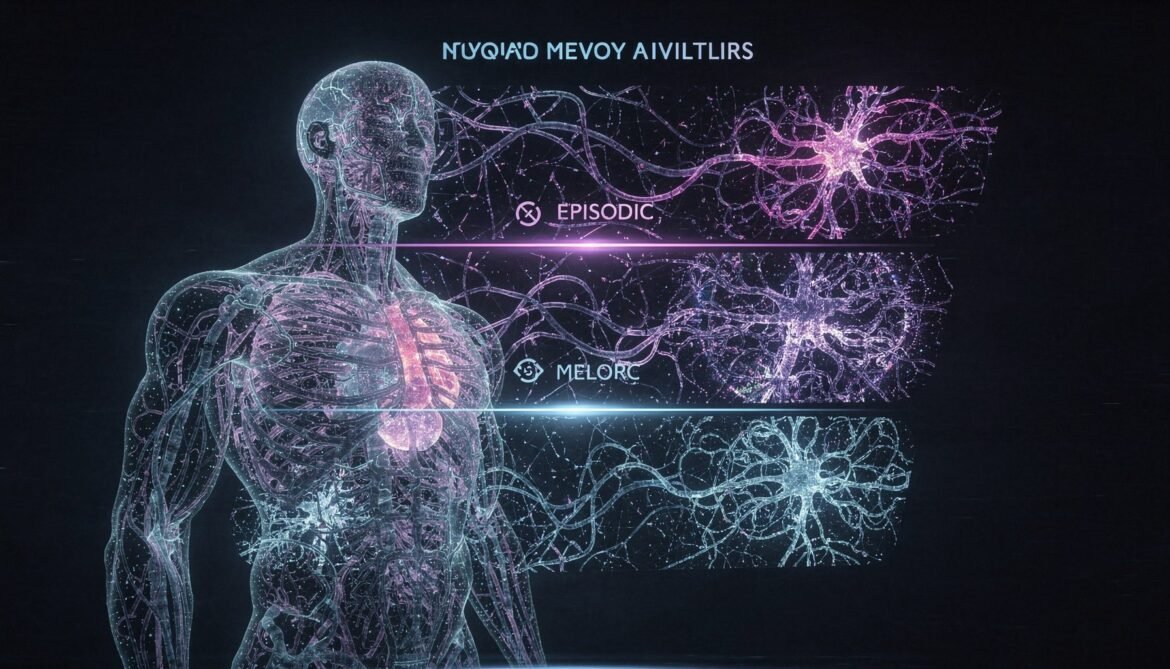
Human memory is not a single system. Cognitive science identifies distinct types of long-term memory that serve different functions. The same taxonomy applies directly to AI agents, and building the wrong type of memory for a given problem is as bad as having no memory at all.
Episodic Memory: What Happened
Episodic memory stores specific events and experiences in temporal order. For an agent, this means conversations, decisions, actions taken, results observed, and errors encountered, each stamped with when they happened and who was involved. Episodic memory answers questions like: “What did we discuss about the authentication service last Tuesday?” or “What tools did this agent invoke in its last five sessions and what did they return?”
This is the memory type most directly analogous to conversation history, but extended across sessions and stored externally rather than held in a context window. Episodic memory is sequential, specific, and time-indexed. The primary storage pattern is append-only with retrieval by recency, relevance, or both.
Semantic Memory: What Is Known
Semantic memory stores facts, concepts, and generalised knowledge extracted from experience. For an agent, this means distilled understanding of a user’s domain, preferences, constraints, and the entities the agent regularly works with. Semantic memory answers questions like: “What does this user’s codebase architecture look like?” or “What compliance requirements apply to this customer’s environment?”
Unlike episodic memory, semantic memory is not tied to specific events. It is the condensed knowledge that emerges from many episodes. The storage pattern is vector-indexed for semantic similarity search: when an agent encounters a new problem, it retrieves the most relevant semantic memories to inform its approach.
Procedural Memory: How Things Are Done
Procedural memory stores successful patterns, workflows, and learned skills. For an agent, this means tool usage sequences that worked, approaches that solved specific problem types, and failure patterns to avoid. Procedural memory answers questions like: “What is the most reliable sequence of tools to use for this type of deployment?” or “Which approach failed for this class of problem and what worked instead?”
Procedural memory is what allows agents to genuinely improve over time rather than rediscovering the same solutions repeatedly. The storage pattern is structured: workflows are stored with their input context, action sequences, outcomes, and success/failure labels, then retrieved by matching the current situation to past situations.
flowchart LR
    subgraph Episodic["Episodic Memory\nWhat Happened"]
        E1["Conversation logs\nper session"]
        E2["Actions and\ntool results"]
        E3["Decisions made\nand outcomes"]
        E1 & E2 & E3 --> EDB[("PostgreSQL\n+ pgvector\nTime-indexed")]
    end

    subgraph Semantic["Semantic Memory\nWhat Is Known"]
        S1["User preferences\nand constraints"]
        S2["Domain facts\nand concepts"]
        S3["Entity knowledge\nprojects, people"]
        S1 & S2 & S3 --> SDB[("Vector Store\nPinecone / Qdrant\nSimilarity-indexed")]
    end

    subgraph Procedural["Procedural Memory\nHow Things Are Done"]
        P1["Successful\ntool sequences"]
        P2["Problem-solution\npatterns"]
        P3["Failure patterns\nto avoid"]
        P1 & P2 & P3 --> PDB[("Structured Store\nPostgreSQL\nPattern-indexed")]
    end

    Agent["AI Agent\nClaude Sonnet 4.6\nGPT-5.4"] --> Episodic & Semantic & Procedural

    style Episodic fill:#1e3a5f,color:#fff
    style Semantic fill:#166534,color:#fff
    style Procedural fill:#713f12,color:#fff
Working Memory: The Fourth Type
There is a fourth memory type worth naming separately, though it is not the focus of this series: working memory. This is the agent’s in-context state during a single session, everything currently held in the LLM context window. Working memory is fast and immediately accessible but limited in size and ephemeral by nature.
The role of long-term memory (episodic, semantic, procedural) is to populate working memory intelligently at the start of each session and after each significant event. The agent retrieves relevant memories, injects them into context, and works with them. At the end of the session, new memories are written back to the persistent stores. This cycle is the foundation of the architecture this series builds.
sequenceDiagram
    participant U as User
    participant A as Agent
    participant WM as Working Memory\n(Context Window)
    participant LTM as Long-Term Memory\n(Persistent Stores)

    U->>A: Start new session
    A->>LTM: Retrieve relevant memories\n(episodic, semantic, procedural)
    LTM-->>WM: Inject memories into context
    U->>A: Send message
    A->>WM: Reason with in-context memories
    A-->>U: Response
    A->>LTM: Write new memories\n(async, end of turn)

    Note over WM,LTM: Memory cycle repeats each turn
    Note over LTM: Consolidation runs in background\nto compress episodic into semantic
The Full Architecture This Series Builds
Each part of this series builds one layer of a complete production memory architecture. By Part 8, you will have a fully working system you can deploy against Claude Sonnet 4.6 or GPT-5.4.
| Part | Topic | Memory Type | Stack |
|---|---|---|---|
| 2 | Episodic memory storage and retrieval at scale | Episodic | PostgreSQL + pgvector, Node.js |
| 3 | Long-term knowledge layer with vector stores | Semantic | Qdrant, Python |
| 4 | Agents that learn from past actions | Procedural | PostgreSQL, C# |
| 5 | Memory consolidation and history compression | Episodic to Semantic | Background workers, Node.js |
| 6 | Multi-agent shared memory spaces | All types | Redis + PostgreSQL, Python |
| 7 | Memory security, PII scrubbing, tenant isolation | All types | Enterprise patterns, Node.js |
| 8 | Full reference architecture and production deployment | All types | Complete stack, monitoring |
Key Design Decisions Before You Build
Before writing any code, there are several architectural decisions that affect every subsequent choice in the system.
Synchronous vs Asynchronous Memory Writes
Writing memories synchronously during a request adds latency to every agent turn. Writing asynchronously means there is a window where the agent produces output before the memory is durably stored. For most enterprise applications, async writes with a reliable queue (Redis Streams, Azure Service Bus) is the right default. The latency benefit outweighs the small consistency risk, which you can manage with idempotent write operations.
Memory Retrieval Strategy
How you retrieve memories at the start of each session determines whether the agent feels intelligent or just data-rich. Retrieving everything is not feasible beyond a few sessions. You need a retrieval strategy that selects the most relevant memories for the current context. The right approach combines recency (recent memories are almost always relevant), semantic similarity (memories similar to the current query), and importance scoring (memories tagged as high-value during consolidation).
Memory Granularity
Storing entire conversation transcripts as single memory objects is simple but makes retrieval imprecise. You retrieve too much or too little. Chunking memories into discrete facts, events, and patterns gives you finer retrieval granularity at the cost of more storage operations. The right granularity depends on your retrieval patterns: if you need to recall specific facts, chunk finely; if you need to recall context for a project, store at project-event granularity.
Multi-Tenant Isolation
Enterprise agents almost always serve multiple users or organisations from the same infrastructure. Every memory store must be designed with tenant isolation from day one. Retrofitting isolation onto a flat memory store is expensive and error-prone. The correct pattern is to include a tenant identifier in every memory record and enforce filtering at the query layer, not the application layer.
Why This Is Different From RAG
Agent memory is often conflated with RAG (Retrieval-Augmented Generation). They share some infrastructure (vector stores, embedding models) but serve fundamentally different purposes.
RAG retrieves external documents that the model was not trained on: product manuals, policy documents, knowledge bases. The documents exist independently of the agent and its interactions. RAG is about giving the model access to information it does not have.
Agent memory retrieves things the agent itself experienced: conversations it had, decisions it made, patterns it learned through use. The memories are generated by the agent’s interactions and belong to its operational history. Agent memory is about giving the model continuity of experience.
In practice, a complete enterprise agent system uses both. RAG provides access to external knowledge. Agent memory provides continuity of experience. They can share infrastructure but should be architected as separate retrieval paths with different indexing strategies, TTLs, and access patterns.
What Is Next
Part 2 builds the episodic memory layer: the system that stores and retrieves conversation history, agent actions, and session events across sessions at production scale. The implementation uses PostgreSQL with the pgvector extension for hybrid time-based and semantic retrieval, with a complete Node.js client that handles writes, reads, and relevance scoring.
References
- arXiv – “Generative Agents: Interactive Simulacra of Human Behavior” (https://arxiv.org/abs/2304.03442)
- Anthropic – “Tool Use and Agent Documentation” (https://docs.anthropic.com/en/docs/build-with-claude/tool-use)
- OpenAI – “Introducing GPT-5.4” (https://openai.com/index/introducing-gpt-5-4/)
- LangChain – “Memory Concepts Documentation” (https://python.langchain.com/docs/concepts/memory/)
- Pinecone – “LangChain Conversational Memory Guide” (https://www.pinecone.io/learn/series/langchain/langchain-conversational-memory/)