
























The Ideas You Never Share: Overcoming Fear of Failure
You have a good idea but don’t speak up. What if it’s stupid? What if you look incompetent? So you stay quiet. Someone else proposes it later and everyone loves it. Fear just cost you.
Come and explore with me
 Advanced Rust Series Part 9: Lifetime Patterns in Production Code – Common Mistakes and How to Fix Them
 Advanced Rust Series Part 8: The Self-Referential Struct Problem – Pin, Unpin, and Async State Machines
 Advanced Rust Series Part 7: Smart Pointers and Interior Mutability – Box, Rc, Arc, RefCell, and Mutex
 Advanced Rust Series Part 6: Lifetimes in Trait Definitions and Bounds
 Advanced Rust Series Part 5: Lifetimes in Structs and Enums – Holding References Safely
 Azure CLI + GitHub Copilot in VS Code: What Actually Works in 2026
 Advanced Rust Series Part 4: Lifetime Elision – What the Compiler Infers and When You Must Be Explicit
 Advanced Rust Series Part 3: Lifetimes Demystified – Why They Exist and How to Read Them
 Advanced Rust Series Part 2: Borrowing Rules in Depth – The Borrow Checker Mental Model
 Advanced Rust Series Part 1: The Ownership Model Revisited – Beyond the Basics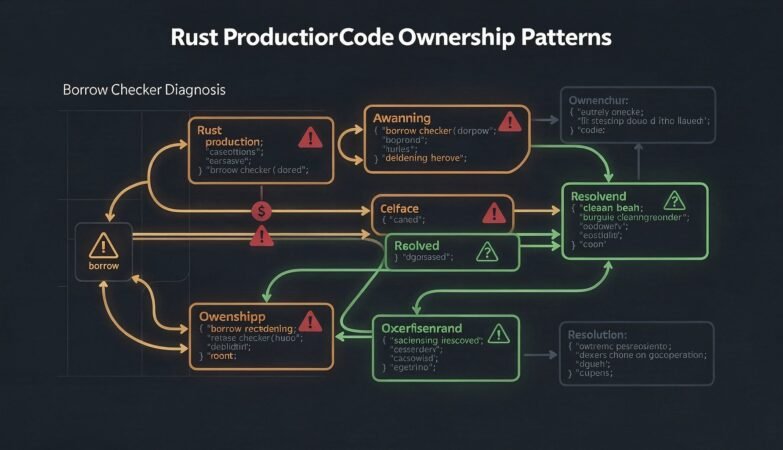




You have a good idea but don’t speak up. What if it’s stupid? What if you look incompetent? So you stay quiet. Someone else proposes it later and everyone loves it. Fear just cost you.
You’ve built a functional application with Sequelize and PostgreSQL. Now it’s time to make it production-ready. This final part covers advanced patterns including error handling,
With your models and migrations in place, it’s time to implement the actual CRUD (Create, Read, Update, Delete) operations. This part focuses on building a
You’ve been refactoring the same function for two hours. It works. It’s tested. But it’s not perfect. So you keep polishing while the deadline slides past and perfection never quite arrives.
It was 3 AM. My coffee was cold, my eyes were burning, and I was staring at yet another rejection email. “Your profile doesn’t quite
Now that you have a solid foundation with Sequelize connected to PostgreSQL, it’s time to define your data models and understand how migrations work. Models
Building a robust backend requires more than just writing code. It requires a solid foundation where your application can seamlessly communicate with your database. In
It’s 9 PM. You’re having dinner. Your phone buzzes. A Slack message. You ignore it. It buzzes again. Your partner gives you that look. The invisible leash just pulled.
A heartfelt letter to hiring managers about automated rejections, unseen portfolios, and a broken system that filters out talented candidates before they ever get a chance to prove what they can do.
They said just this once. Just until launch. That was three months ago. You’re working 60-hour weeks and can’t remember when you last saw sunlight. The emergency never ended.